FIRST WEEK
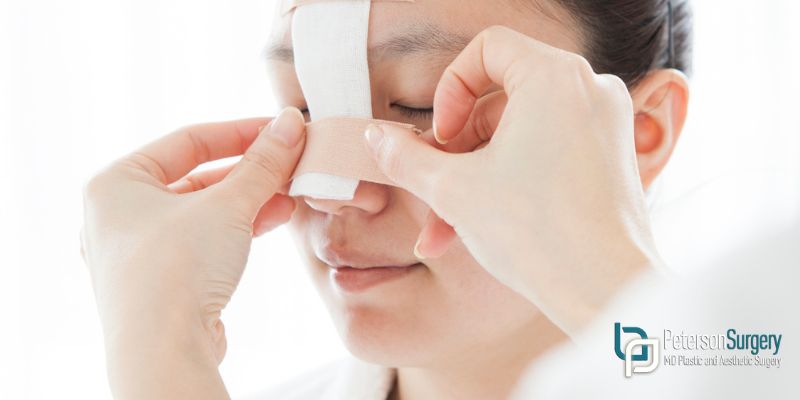
Rhinoplasty recovery begins immediately after surgery, and the first week is usually when swelling, bruising, congestion, and tenderness are most noticeable. A splint may be placed over the nose to protect the new structure while the tissues begin healing. Depending on the procedure, internal supports or dressings may also be used. These are temporary and are removed according to the surgeon’s instructions.
During the first few days, the nose can feel blocked because of internal swelling. Breathing through the nose may be difficult, even when surgery was performed partly to improve airflow. This congestion usually improves gradually as swelling decreases. Mild pressure, tightness, and sensitivity are also common during this stage.
Patients are generally advised to rest with the head elevated, including while sleeping. Keeping the head higher than the chest can help limit swelling and may make resting more comfortable. It is also important to avoid bumping, rubbing, or placing unnecessary pressure on the nose.
Common early recovery experiences include:
- Swelling
- Bruising
- Congestion
- Tenderness
- Pressure
- Fatigue
Patients should follow all instructions for medications, incision care, bathing, sleeping position, and activity. Heavy lifting, strenuous exercise, repeated bending, and activities that raise blood pressure are usually limited during the early stages because they can increase swelling or bleeding.
By the end of the first week, many patients begin noticing that bruising and discomfort are improving. Follow-up appointments allow the surgical team to check healing and remove splints, sutures, or other supports when appropriate. Some patients may feel ready to return to desk work around this point, although visible swelling or bruising can remain.
FIRST MONTH
The second and third weeks often feel much easier than the first. Bruising continues to fade, congestion improves, and normal daily routines become more comfortable. Even when the nose already looks different, patients should avoid judging the final result too early because residual swelling can temporarily affect the bridge, tip, nostrils, and overall proportions.
Swelling does not always disappear evenly. One side may look slightly fuller than the other, or the nose may appear more swollen at certain times of day. These temporary differences are part of the healing process and do not necessarily reflect the final result.
Many patients can return to regular non-strenuous activities during this stage with their surgeon’s approval. Exercise should be reintroduced gradually rather than resumed all at once. Activities that create a risk of impact to the face usually need to be avoided for longer because the nasal bones and cartilage are still healing beneath the surface.
Important considerations during the first month include:
- Exercise
- Glasses
- Sunlight
- Sleep
- Skincare
- Sports
- Travel
Patients who wear glasses may receive special instructions because frames can place pressure on the bridge of the nose. Depending on the surgery, temporary alternatives or adjusted support methods may be recommended.
Sun protection is also important. Healing skin and incision areas can be more sensitive to ultraviolet exposure, so patients should follow their surgeon’s advice regarding sunscreen, hats, and time outdoors.
By around one month, much of the obvious swelling may have improved, but the nose can still appear slightly fuller than its final shape. Definition through the bridge may become more noticeable, while the nasal tip often remains swollen for longer.
For patients who had rhinoplasty to address both appearance and breathing, airflow can continue improving during this stage. Internal swelling takes time to resolve, so functional changes may develop gradually rather than immediately after surgery.
LONG-TERM HEALING
Rhinoplasty has a longer refinement period than many other cosmetic procedures. Although patients can usually return to everyday life much earlier, the nose continues changing beneath the surface for several months. This is why patience is an important part of rhinoplasty recovery.
By approximately three months, a significant amount of swelling may have resolved, and the overall shape of the nose usually becomes easier to appreciate. The bridge may look more defined, and facial proportions can begin appearing more natural as the tissues settle.
The nasal tip often takes longer to refine. Swelling in this area can persist for several months, especially in patients with thicker skin. This does not mean healing has stopped. Instead, the tissues are continuing to adjust gradually around the reshaped cartilage and bone.
Between three and six months, patients may notice several subtle improvements:
- Definition
- Softness
- Balance
- Breathing
- Symmetry
- Comfort
At six months, many patients feel their nose looks close to its final appearance. However, small amounts of swelling can remain, especially around the tip. Final rhinoplasty results are often assessed closer to one year because the nose continues refining slowly.
The exact timeline varies from person to person. Skin thickness, the amount of structural work performed, previous nasal surgery, nasal trauma, and individual healing can all influence how long recovery takes. Revision rhinoplasty may also require a longer healing period because tissues have already undergone surgery.
Patients should continue attending scheduled follow-up appointments even after they feel fully recovered. These visits allow the surgeon to monitor healing, evaluate changes in shape and breathing, and address any concerns that arise.
It is also important to contact the surgical team if something feels unusual rather than waiting for the next appointment. Increased pain, unexpected bleeding, worsening swelling, fever, or other concerning symptoms should be discussed with the surgeon.
Rhinoplasty can address concerns involving the size, shape, bridge, tip, nostrils, symmetry, and proportion of the nose. In some cases, structural changes may also improve breathing. Because every nose is different, the recovery experience and final outcome are highly individual.
Recovery is not simply about waiting for swelling to disappear. Protecting the nose, keeping follow-up appointments, and respecting activity restrictions all help support the healing process. Patients should avoid comparing their progress too closely with someone else’s photographs or timeline because anatomy and surgical techniques differ. Early changes can be encouraging, but the appearance seen after several days or weeks is not the finished result. Giving the tissues time to settle allows the nose to develop more refined contours gradually. Clear communication with the surgical team can also help patients understand which changes are expected at each stage of recovery.
A consultation with Peterson MD can help patients understand what rhinoplasty may involve, how long recovery could take, and what results may be realistic based on their anatomy and goals. Following post-operative instructions carefully and allowing enough time for the nose to heal are essential parts of achieving a safe, natural-looking result.
FAQ's
Q: WHEN WILL I LOOK NORMAL AGAIN AFTER RHINOPLASTY?
A: Most patients see a noticeable improvement in bruising and swelling within the first two weeks. You may still have some puffiness, especially around the tip of the nose, but this usually becomes less obvious with time. Many people feel comfortable returning to work and social activities once the early swelling has settled.
Q: WHEN CAN I SLEEP NORMALLY AFTER NOSE SURGERY?
A: During early recovery, patients are often advised to sleep with their head elevated and avoid putting pressure on the nose. As healing progresses, your surgeon can let you know when it is safe to return to your usual sleeping position. Following these instructions can help protect the nose while swelling continues to decrease.
Q: WHY DOES MY NOSE STILL LOOK SWOLLEN MONTHS LATER?
A: Some swelling can last for several months after rhinoplasty, particularly around the nasal tip. This is a normal part of the healing process and does not necessarily mean something is wrong. The nose continues refining gradually, which is why final rhinoplasty results may take up to a year to fully develop.
.jpg "Laser Skin Resurfacing vs Dermabrasion: Which Skin Rejuvenation Treatment Is Right for You Overall?")
.jpg "The Best Skin Treatments for Sun Damage, Wrinkles, and Acne Scars")
.jpg "Plastic Surgery vs Cosmetic Surgery: What's the Difference?")