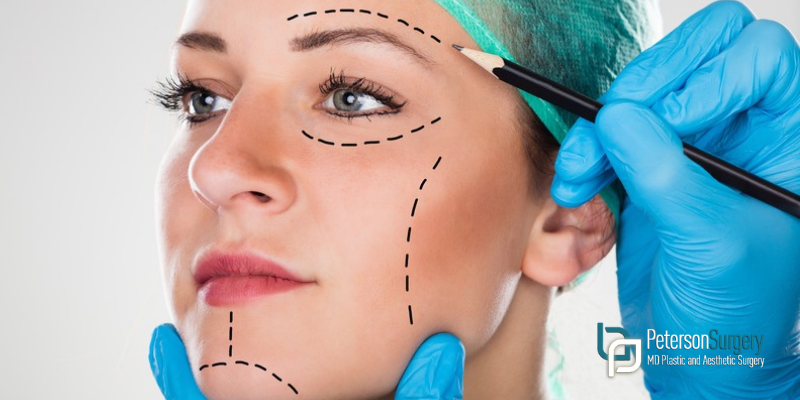
Many patients considering a facelift and neck lift together want to know what healing really looks like: how long the swelling lasts, when it is reasonable to be seen in public, and when everyday life can resume. This week-by-week guide describes what many patients experience, along with the questions worth asking your surgeon before you book.
The face and neck age together, and changes in one can make the other more noticeable. A facelift addresses sagging in the lower face and jawline, while a neck lift addresses loose skin and banding below the chin. When both are concerns, many patients and surgeons choose to treat them in a single operation so the result looks balanced and recovery happens once, not twice.
Combining the two does not necessarily mean a much longer recovery, but it does mean planning for a full healing period. Every patient heals differently, and your surgeon's instructions always take priority over any general timeline. For more on how the procedures work together, see our guide to combining facelift and neck lift surgery, or our overview of what a neck lift involves.
The first days are typically the most uncomfortable and the most important for rest. Patients commonly notice swelling, bruising, tightness across the face and neck, and some numbness. Your surgeon may use dressings or a support garment, and some surgeons use small drains for a short time. Resting with your head elevated helps keep swelling down.
Common early experiences include:
Light walking around the house is usually encouraged, while bending, lifting, and strenuous activity are avoided. Plan to have someone with you for the first few days, particularly for the drive home and for help with meals and household tasks. Contact your surgical team promptly if you notice swelling that is much greater on one side, severe pain, fever, or anything that concerns you.
Discomfort generally eases during this period and energy begins to return. Bruising fades through yellow and green tones, and swelling gradually reduces, although it is rarely gone. Stitches or other closures are usually removed at follow-up visits as your surgeon directs.
Many patients start to feel comfortable around close family and friends, and some return to light desk-based work, depending on how they are healing and what their surgeon advises. Makeup and hairstyling can help camouflage lingering bruising once your surgeon says it is safe to use them. Strenuous exercise and heavy lifting generally remain off the table.
By this stage, many patients feel much more like themselves. Swelling is noticeably lower, though it can still fluctuate, often looking worse later in the day or after activity. Your surgeon may begin clearing you to return to exercise in stages. Tightness along the neck and around the ears is common as tissues settle.
Healing continues well after the early weeks. Residual swelling can take months to fully resolve, sensation changes gradually improve, and incision lines mature and fade over time without disappearing completely. The result refines as tissues soften, so it is best to judge the outcome over months, not days. Protecting your skin from the sun and following your surgeon's scar-care advice support healing. To help the result last, read our tips on maintaining the results of your facelift.
No two recoveries are identical. The factors that most often shape healing include:
Our guide to recovery after a facelift goes into more detail on everyday care during healing.
A smoother recovery usually starts before surgery. Arrange time off work, someone to help at home, and a comfortable place to rest with your head elevated. Ask your surgeon about medications and supplements to stop beforehand, and be clear about your goals and your schedule, including any events you are working around. Our guide to preparing for facelift surgery offers a practical checklist. If you are travelling for surgery, see travelling to Kelowna for plastic surgery.
Good candidates are generally in good overall health, do not smoke, and have realistic expectations about what surgery can do. Some people are better suited to a less extensive approach, and others to a combination of procedures. You can read more in are you a good candidate for facelift surgery and in our comparison of a facelift versus a mini facelift. Dr. Brian Peterson's before-and-after gallery is also a useful way to see typical outcomes; you can browse it on our results page.
Like any surgery, a facelift and neck lift carry risks. These can include bleeding or fluid collection, infection, delayed healing, visible scarring, changes in sensation, temporary or lasting nerve injury, asymmetry, and the possibility that further treatment may be considered. Anesthesia has its own risks. Surgery can refresh the contour of the face and neck, but it cannot stop the aging process or guarantee a specific result. Your surgeon will go through your personal risks at your consultation.
If you would like to talk through whether a facelift, a neck lift, or both is right for you, book a consultation with Dr. Peterson's team in Kelowna.
Q: How long is recovery after a facelift and neck lift?
A: Early recovery takes a number of weeks, while swelling and the final result continue to settle over several months. Your surgeon can explain what to expect for your plan.
Q: When can I go back to work?
A: It depends on your healing and your job. Desk-based work may be possible sooner than physically demanding work, and your surgeon will advise you.
Q: Is recovery longer if I have both procedures together?
A: Recovery is generally similar to, or only somewhat longer than, either procedure alone, but this depends on what is being done. Your surgeon can explain how it applies to you.
Q: When will I see my final result?
A: Many patients see a clear improvement within weeks, but swelling and tissue changes continue for months, so the final result develops gradually.
Q: Will I have visible scars?
A: Incisions are usually placed in and around natural creases and the hairline where possible, and they fade over time without disappearing completely. Your surgeon can show you where yours would be placed.
Q: Can I have other procedures at the same time?
A: Some patients combine a facelift and neck lift with procedures such as eyelid or brow surgery. Whether this is advisable depends on your goals and health, so it is worth raising at your consultation.
Dr. Brian D. Peterson
Okanagan Health Surgical Centre
3320 Richter St #401, Kelowna, BC V1W 4V5