Deciding on rhinoplasty in Kelowna is a big step, and it helps to know what to ask before you book. This guide covers how to choose a surgeon, what a consultation involves, how to approach questions about cost, and what recovery typically looks like, so you can walk into your appointment prepared.
People look into rhinoplasty for many reasons. Some want to change the shape, size, or proportions of the nose. Others want to improve breathing, correct the effects of an injury, or both. Being clear about which of these matters most to you helps your surgeon plan the right approach, and it helps you judge whether surgery is the right step. If you are unsure of the terminology, our guide to nose job, rhinoplasty, and nasal surgery explains how the terms are used, and are you a good candidate for nasal surgery covers who tends to benefit.
The nose is a small structure with a large effect on the whole face, and rhinoplasty is widely regarded as one of the more technically demanding facial procedures. When you compare surgeons, it is reasonable to ask about:
Dr. Brian Peterson is a board-certified plastic surgeon who operates at the Okanagan Health Surgical Centre in Kelowna. You can learn more on his profile page and browse examples in our rhinoplasty before-and-after gallery. Photos show what is possible but are not a promise of what your own result will be.
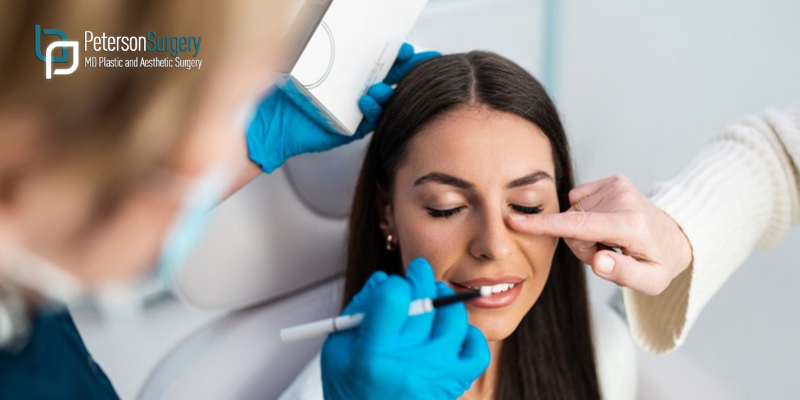
A consultation is the time to talk openly about what you would like to change and why. Your surgeon will ask about your medical history, any previous nasal injury or surgery, and any breathing difficulties, and will examine the structure of your nose, including the skin, cartilage, and airway. You can then discuss which techniques may suit you, what is realistic, and what the risks are.
It helps to arrive with a few photos of noses you like and, just as usefully, ones you do not. Bring a list of questions, and be honest about your expectations. A good consultation should leave you better informed, not pressured. Our guide to six things to know before getting rhinoplasty is a helpful companion to read beforehand.
Many people want to know the cost of rhinoplasty before they book, and it is a fair question. The total depends on the complexity of your surgery and whether it is cosmetic, functional, or both, so a firm figure comes after an examination. When you receive a quote, ask exactly what it includes, such as the surgeon's fee, the facility, anesthesia, and follow-up visits, and whether any part may be covered by provincial health coverage or private insurance when there is a functional breathing problem. For information about payment options, visit our financing page or read what to know about surgery financing in Kelowna.
Some patients have breathing problems related to the structure of the nose, such as a deviated septum or narrow nasal passages, and nasal surgery can sometimes address them alongside, or instead of, cosmetic changes. Whether this applies to you is something only an examination can tell. If you are curious about the link between nasal structure and sleep, see can rhinoplasty reduce snoring.
Rhinoplasty recovery happens in stages. In the first days, patients commonly notice swelling, bruising around the eyes, congestion, and a splint or dressing on the nose. Many people feel well enough to resume light activity within the first couple of weeks, though your surgeon will tell you when to return to work, exercise, and activities that could bump the nose.
Swelling can take many months to settle fully, and subtle changes can continue for up to a year or longer, so the final shape is not visible right away. For a stage-by-stage look, read our rhinoplasty recovery timeline and our guide to recovering from a rhinoplasty.
All surgery carries risk. Rhinoplasty risks can include bleeding, infection, breathing difficulty, changes in sensation, scarring, asymmetry, results that differ from what was hoped for, and the possibility of revision surgery. Anesthesia has its own risks. The goal of surgery is improvement, not perfection, and your surgeon can explain your individual risks and what outcome is realistic for your anatomy.
If you are thinking about nasal surgery, book a consultation with Dr. Peterson's team in Kelowna to talk through your options.
Q: How long does rhinoplasty recovery take?
A: Early recovery takes about one to two weeks for many patients, while swelling and the final shape continue to settle over months. Your surgeon can explain what to expect for you.
Q: Can rhinoplasty improve breathing?
A: Some patients have breathing problems related to the structure of the nose, and nasal surgery can sometimes address them. Your surgeon can tell you whether this applies to you.
Q: How much does rhinoplasty cost in Kelowna?
A: The cost depends on the complexity and goals of your surgery, so it is confirmed after a consultation. Ask exactly what is included in the quote.
Q: Will everyone know I had surgery?
A: Many patients aim for a natural-looking result that suits their face. Swelling and bruising are visible early on, so most people plan some time away from social activity.
Q: When can I exercise again?
A: Strenuous exercise is usually avoided for a number of weeks, and glasses or anything pressing on the nose may need to be avoided for a time. Your surgeon will tell you when each activity is safe.
Q: Is rhinoplasty the same as a nose job?
A: The terms are often used interchangeably. Rhinoplasty is the medical term, and it can address appearance, function, or both.
Dr. Brian D. Peterson
Okanagan Health Surgical Centre
3320 Richter St #401, Kelowna, BC V1W 4V5