
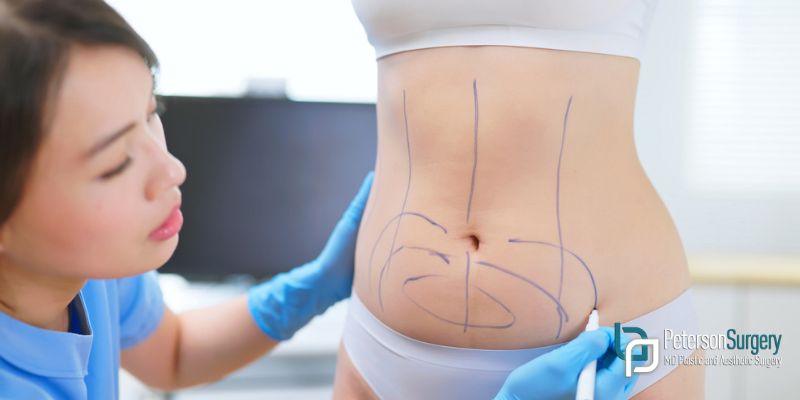
HOW THE ABDOMEN CAN CHANGE
Tummy tuck surgery and liposuction are both used to improve abdominal shape, but they work in very different ways. Liposuction is designed to remove localized fat deposits from specific areas of the body. During the procedure, a surgeon inserts a thin instrument called a cannula through small incisions and uses it to loosen and remove selected fat cells. The abdomen, waist, hips, and flanks are common treatment areas because fat can remain despite healthy lifestyle habits.
Patients considering liposuction often have firm skin. Because liposuction does not remove significant amounts of skin, skin elasticity is important to the final result. When elasticity is limited, removing fat alone may not create the smoother appearance a patient expects.
A tummy tuck, also called abdominoplasty, addresses a different set of concerns. The procedure removes excess abdominal skin and can tighten separated or weakened muscles when appropriate. This can be especially relevant after pregnancy, major weight changes, or ageing.
Common concerns include:
- Fat
- Skin
- Muscle
- Bulging
- Laxity
A tummy tuck generally requires a longer incision across the lower abdomen because loose skin must be physically removed. The surgeon can then reposition the remaining tissue to create a smoother and firmer contour.
These differences are why one procedure is not automatically better than the other. Liposuction may create excellent refinement when stubborn fat is the main concern, while a tummy tuck may provide a more noticeable change when excess skin or muscle separation is present.
The scale of correction also differs between the procedures. Liposuction can improve definition and reduce fullness in carefully selected areas, but it cannot reposition stretched abdominal skin. A tummy tuck can create a more extensive change when the abdomen has been affected by pregnancy or major weight fluctuations. Identifying whether fat, skin, muscle changes, or a combination of concerns is creating the unwanted contour can help determine which surgical approach is more appropriate.
HOW BODY TISSUES AFFECT RESULTS
The quality of the final result depends heavily on the relationship between abdominal fat, skin, and muscle tone.
Fat distribution is often the first consideration. Liposuction is particularly useful for patients who have localized fullness that does not respond as expected to nutrition and exercise. The goal is targeted contouring rather than major weight loss.
Skin elasticity becomes especially important after the fat is removed. Pregnancy, weight changes, genetics, and previous stretching can influence skin contraction.
When there is substantial loose skin, a tummy tuck may offer a more complete correction. Excess skin can create folds or an overhanging lower abdomen that exercise cannot remove. Surgically removing this tissue allows the surgeon to reshape the abdominal area in a way that liposuction cannot accomplish by itself.
Muscle condition is another important consideration. Pregnancy can cause the paired abdominal muscles to separate, a change commonly known as diastasis recti. This may create a rounded or protruding appearance even when there is little excess fat.
A tummy tuck can include repair of the abdominal wall when appropriate. Tightening these tissues may help create a flatter and more supported appearance through the midsection. Liposuction cannot repair muscle separation because it works in the layer of fat beneath the skin rather than on the abdominal muscles themselves.
Important assessment factors include:
- Elasticity
- Volume
- Separation
- Scarring
- Proportion
A surgeon will evaluate previous abdominal scars because they can affect incision planning and tissue movement.
For some patients, combining a tummy tuck with liposuction provides the most balanced approach. The tummy tuck can remove loose skin and address the abdominal wall, while liposuction can refine nearby areas such as the waist or flanks.
Fat distribution around the entire torso may also influence the treatment plan. A patient may have loose skin across the lower abdomen but additional fullness through the waist or sides. Correcting only the central abdomen may not create the desired overall proportion. Carefully planned liposuction can sometimes refine surrounding areas and create smoother transitions between the abdomen, waist, hips, and flanks while the tummy tuck addresses loose skin and abdominal wall concerns.
Medical history, recovery demands, and individual risk factors must be considered. A qualified plastic surgeon can carefully assess whether one procedure or a combined plan is the safer and more effective option.
FINDING THE RIGHT SURGICAL PROCEDURE
The best choice is the one that directly addresses the tissues responsible for the patient's concern while fitting their health, recovery expectations, and long-term goals.
Patients whose main concern is localized abdominal fat may be good candidates for liposuction if their skin remains relatively firm. In these situations, removing targeted fat may be enough to achieve the desired change.
A tummy tuck may be more appropriate when loose skin is the dominant concern. Patients who have gone through pregnancy or significant weight loss may notice skin that hangs, folds, or no longer follows the shape of the abdominal wall.
Liposuction usually involves smaller incisions and may have a shorter initial recovery period, although swelling can take weeks or months to fully resolve. Compression garments are often used to support healing, reduce swelling, and help the tissues settle.
Tummy tuck recovery is typically more involved because the procedure removes skin and may tighten the abdominal wall. Patients can expect temporary tightness, swelling, soreness, and limitations on lifting or strenuous activity.
Patients should also consider:
- Scars
- Recovery
- Pregnancy
- Weight
- Goals
Scarring differs significantly between the two procedures. Liposuction usually leaves several small incision scars. A tummy tuck creates a longer scar across the lower abdomen, although surgeons typically position it low enough to be concealed beneath many styles of underwear or swimwear.
Recovery expectations should be considered alongside cosmetic goals. Liposuction patients may return to lighter daily activities sooner, although bruising, swelling, tenderness, and temporary numbness can continue during healing. Tummy tuck patients generally require more time before resuming strenuous exercise or heavy lifting because the abdominal tissues need adequate time to recover. Following postoperative instructions, attending follow-up appointments, and gradually increasing activity can help support healing after either procedure.
Future pregnancy and major weight changes can affect either result. Weight gain can affect liposuction results, while pregnancy or weight changes can stretch tissues after a tummy tuck. Maintaining a stable weight and discussing future pregnancy plans with the surgeon can help protect the longevity of the result.
Realistic expectations are equally important. Neither procedure is intended to create perfection or replace healthy habits. The goal of body contouring is to improve proportion and address specific areas that remain difficult to change through lifestyle measures alone.
During a consultation, the surgeon can evaluate skin quality, fat distribution, muscle condition, overall proportions, medical history, previous surgery, and the patient's overall desired outcome.
Ultimately, better results come from choosing the procedure that matches the patient's anatomy rather than selecting the option that sounds more extensive. For the right candidate, liposuction can create refined definition with targeted fat removal. For someone with loose skin and weakened abdominal tissues, a tummy tuck may produce a more comprehensive transformation. A personalized surgical plan allows body contouring to be tailored to the concerns that matter most to each patient.
FAQ's:
Q: CAN LIPOSUCTION REMOVE LOOSE ABDOMINAL SKIN?
A: No. Liposuction primarily removes localized fat and does not remove significant amounts of loose skin. A tummy tuck may be more appropriate when excess skin is the main concern.
Q: CAN A TUMMY TUCK AND LIPOSUCTION BE COMBINED?
A: Yes, some patients may be candidates for both procedures. Combining them can address loose skin, abdominal muscle concerns, and localized fat during the same treatment plan.
Q: WHICH PROCEDURE PROVIDES BETTER BODY CONTOURING RESULTS?
A: It depends on the concern being treated. Liposuction may be better for isolated fat deposits, while a tummy tuck may provide more comprehensive results when loose skin or weakened abdominal muscles are present
.jpg "Laser Skin Resurfacing vs Dermabrasion: Which Skin Rejuvenation Treatment Is Right for You Overall?")
.jpg "The Best Skin Treatments for Sun Damage, Wrinkles, and Acne Scars")
.jpg "Plastic Surgery vs Cosmetic Surgery: What's the Difference?")