HOW DERMABRASION WORKS
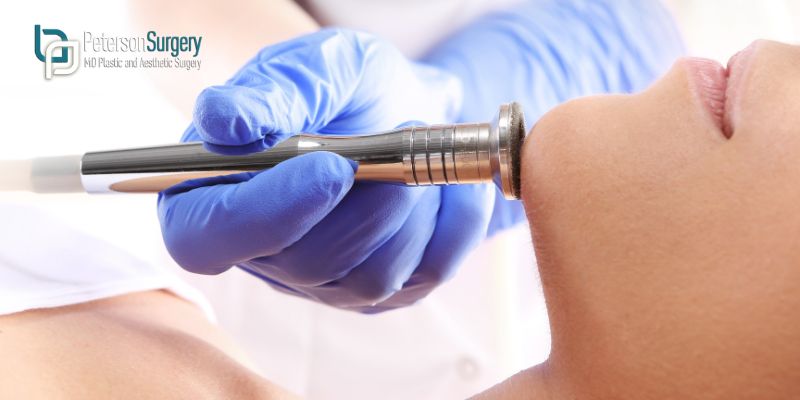
Dermabrasion is a controlled mechanical resurfacing procedure. During treatment, a rotating medical-grade instrument gently removes the outer layers of damaged skin. The depth of exfoliation is carefully controlled to target specific concerns such as acne scarring or uneven texture.
This process triggers the body’s natural healing response. As the treated skin regenerates, new skin cells replace damaged tissue, and collagen production increases. Collagen is essential for structural support and firmness. As collagen rebuilds, the skin becomes smoother, more even, and more resilient.
Because dermabrasion penetrates deeper than many non-invasive treatments, it can address moderate scarring and texture irregularities that topical products or light peels cannot fully correct. The depth of treatment can be adjusted based on the patient’s skin thickness, scar severity, and overall skin health.
The procedure is typically performed under local anesthesia or sedation to ensure patient comfort. Treatment time varies depending on the size of the area being resurfaced. Precision during the procedure is critical, as overly aggressive resurfacing can increase healing time or risk of pigmentation changes. This is why dermabrasion should only be performed by trained medical professionals with experience in surgical skin resurfacing techniques.
WHAT DERMABRASION TREATS
Dermabrasion is most commonly recommended for acne scars, particularly shallow boxcar scars and surface irregularities left behind after inflammatory breakouts. It can also soften surgical scars, reduce fine lines around the mouth, and improve sun-damaged skin that appears rough or uneven.
Patients with textured skin caused by environmental damage, aging, or long-standing pigmentation irregularities may also benefit from dermabrasion. By smoothing the outer layers of skin, the procedure enhances light reflection, which contributes to a brighter and more uniform appearance.
However, dermabrasion is not designed to treat deep dynamic wrinkles, significant skin laxity, or advanced volume loss. In those cases, alternative treatments such as laser resurfacing, fillers, or surgical procedures may be more appropriate.
Ideal candidates typically have lighter skin tones, good overall skin health, and realistic expectations about healing and results. Individuals with active acne, certain inflammatory skin conditions, or a history of abnormal scarring may require alternative approaches. A thorough consultation and skin evaluation are essential to determine suitability and minimize risk.
RECOVERY, RESULTS, AND LONG-TERM BENEFITS
Recovery is a critical part of dermabrasion. Immediately after treatment, the skin will appear red and swollen, similar to a moderate abrasion. The treated area may feel tight, sensitive, and warm during the first several days. As healing progresses, new skin forms and gradually replaces the resurfaced layer.
Initial redness typically improves within several weeks, though subtle pinkness may persist for a longer period depending on depth of treatment. Strict sun protection is essential during this time. Newly resurfaced skin is more vulnerable to UV damage, and sun exposure can increase the risk of pigmentation changes.
Visible improvements often begin within a few weeks and continue to develop as collagen remodeling progresses over several months. Many patients notice smoother texture, softer scarring, and a more even skin tone. Results can be long-lasting, especially when supported by proper skincare and sun protection habits.
When performed appropriately and paired with structured aftercare, dermabrasion offers meaningful texture refinement and skin rejuvenation. It remains one of the most effective mechanical resurfacing procedures for patients seeking noticeable improvement in skin smoothness and clarity.
FAQs
Q: IS DERMABRASION PAINFUL?
A: The procedure is typically performed with local anesthesia or sedation to ensure comfort. Some tenderness and redness are expected during recovery.
Q: HOW LONG DOES IT TAKE TO SEE RESULTS?
A: Initial improvements appear within a few weeks, with continued enhancement as collagen production increases over time.
Q: HOW IS DERMABRASION DIFFERENT FROM A CHEMICAL PEEL?
A: Dermabrasion mechanically resurfaces the skin using a specialized instrument, while chemical peels use acids to exfoliate the surface. Dermabrasion generally reaches deeper layers and may provide more dramatic texture improvement.